Monday, June 27, 2011

Could Athenian-Style Democracy Work Today?

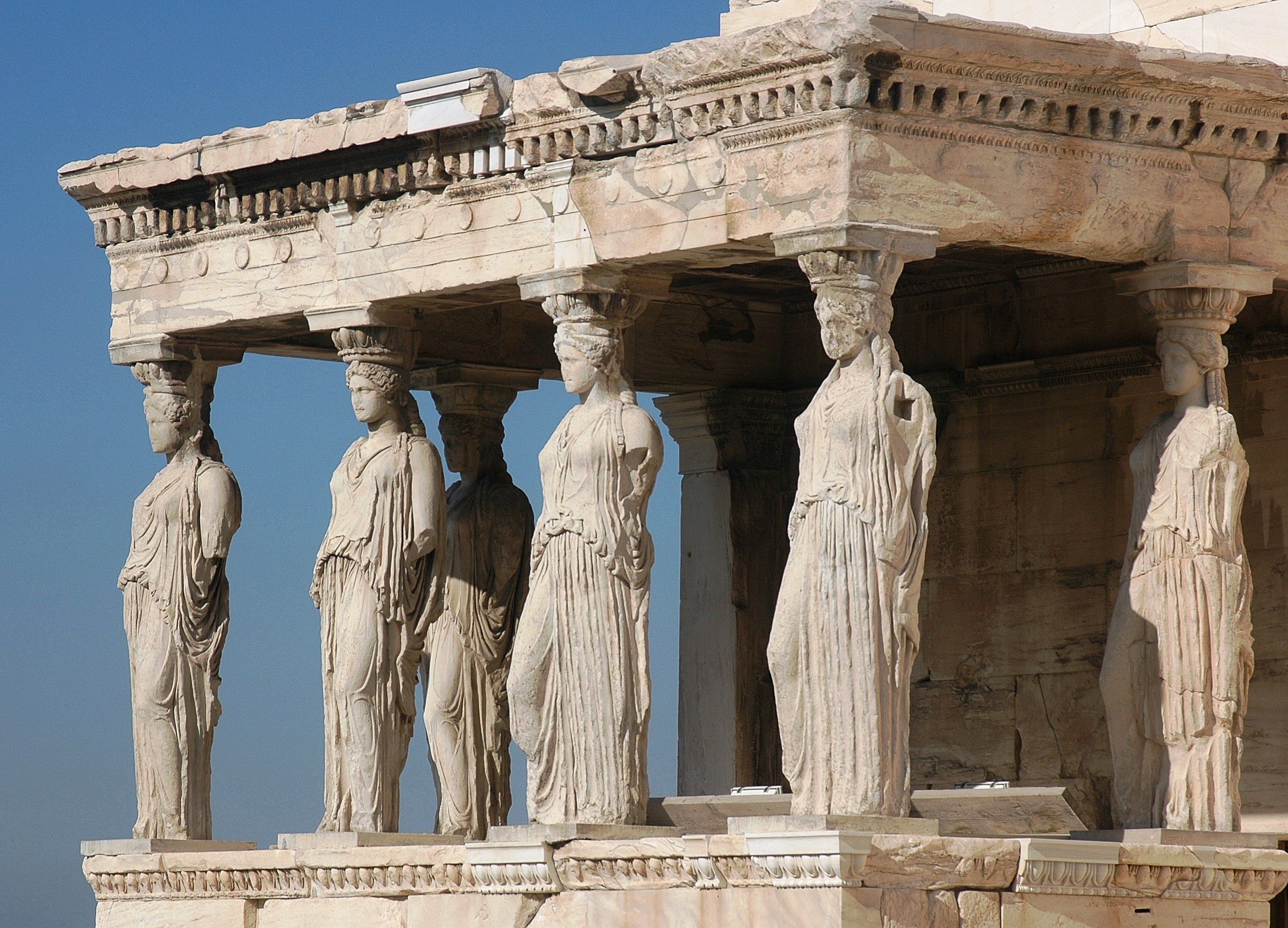
Used under Creative Commons License from Wikipedia user Harrieta171

The government of the United States is technically not a democracy; it is a republic. We elect people to represent us, but we otherwise have no direct role in government.

The democracy of ancient Athens, however, was a true democracy. The assembly (ekklesia) basically consisted of all the adult male citizens who bothered to show up that day. The assembly was the Athenian legislature, responsible for enacting laws, declaring war, and bestowing citizenship. The council (boule) was like the executive branch; they carried out the laws passed by the assembly, but also decided what proposals the assembly would deliberate. The members of the council were chosen by lottery. Trials were all decided by juries of one's peers, again selected by lottery.

The setup worked fine for the ancient city-state, but wasn't practicable when the U.S. was founded. A Georgia farmer couldn't be expected to ride north for the capital every time the American Assembly met. Even today, flying or driving to Washington would be onerous for the average citizen. But now, we don't have to be there physically when we could be there virtually.

So how do we adapt Athenian democracy to fit modern times? The complex bureaucracy necessary for modern governing poses an obstacle. These positions require a technical expertise that we cannot expect every citizen to have. So let's retain the executive branch essentially as it is.

But let's completely explode the legislative branch. Every morning, a daily boule of 100 people will be selected randomly. (Or whatever number and frequency is most sensible.) Each person, if they wish, will be able to propose one law or proposition. They can come up with their own or use a suggestion from citizens who have not yet been chosen for the boule. The proposal can be as simple or as complex as the person wants.

Over the course of the day, every adult citizen can debate and vote on the boule's proposals. Comments can be shown with the proposal and top-rated ones can be shown first like on YouTube. By the evening, the votes will be counted and proposals with a simple majority pass.

It is then up to the executive branch to turn the laypersons' proposals into reality. If people disagree with the actions of those in the executive branch, then a member of the boule could call for a vote of no-confidence. If that official does not retain majority support, they will hold that office as a caretaker for a month while others campaign for it. All Cabinet-level positions will be decided this way.

An independent judiciary will be necessary to check the "tyranny of the majority," i.e. to prevent our assembly from depriving rights from a minority. For this reason, judges and justices cannot be removed by no-confidence votes. Whether they will be elected by the assembly or appointed by the president and confirmed by the assembly...well, I'm not sure which is better.

And what of that de Tocqueville quote? The American Republic will endure until the day Congress discovers that it can bribe the public with the public's money. Our system cuts out the middleman. If given more direct power over our government, will we use it responsibly?

Well, how responsibly is it used now? Senate Democrats don't want to propose a budget because "The Ryan budget is being so good for Democrats. Why mess that up?" Republicans are playing with fire on the debt ceiling due to their unwillingness to even hear the words 'tax increase.' Regardless of whether this is temporary posturing or permanent intransigence, both Congressional Democrats and Republicans are more interested in playing politics than, you know, actually governing.

Plus, it will be harder for moneyed interests to buy off members of Congress when essentially every American is a member of Congress. Granted, they can still use the mass media to sway the public, but that strikes me as more difficult and maybe even fairer.

But maybe you still have your doubts. So let's get together 10,000 people or so, a good cross-section of America, and do a practice run. After a year, compare the course our fake assembly has taken the country with that of Congress. And then we will have our answer.

Sunday, June 19, 2011

Death in the Amazon

A few months ago Obede Loyla Souza, an activist and farmer living in the Brazilian state of Para, argued with loggers who were illegally felling trees in the Amazon. He began receiving death threats. Eight days ago, his body was found with a shotgun blast to the head.

Souza is the sixth person over the last month to be killed in feuds over Amazonian land. The murders apparently began with husband and wife Joao Claudio Ribeiro da Silva and Maria do Espirito Santo, conservationists who worked at a nature reserve. They also had received death threats from loggers and cattle ranchers.

The killings come as Brazil's Congress considers a bill that would reform the country's Forest Code. (The bill has already passed the Chamber of Deputies, the Congress's lower house.) A key element of the bill is a provision granting amnesty for farmers who own less than 400 hectares of land who had illegally cut down trees. Because of the sense of impunity fostered by this provision, the rate of deforestation in March and April was six times faster than last year.

Sunday, June 12, 2011

"CO2 is plant food"

"Plants, as far as I know, are still, still bending toward the light, and if we dance until the heart explodes, it'll make this place ignite."

~MGMT, "Flash Delirium"

"CO2 is not a pollutant; it is green plant food."

~Pierre R. Latour

"The current focus on carbon dioxide has nearly run its course, as it has been clearly shown that it is not harmful. In fact, the slight increase in its tiny concentration will assist agriculture and help to feed the starving people of the world."

~Edward B. Boyle, Jr.

Alas, the world is far more complicated. While it's true that a higher concentration of CO2 would, in a vacuum, improve plant growth, the overall effect on agricultural yields requires a bit of work to tease out.

The changes in climate wrought by more carbon dioxide will improve yields in some areas while hurting yields in others. A recent study published in Science examined the effects of changes in CO2 concentration, temperature, and precipitation on the yields of the four stapliest of staple crops--corn, wheat, rice, and soy--from 1980 to 2008. They estimated that globally, climate change improved rice and soy yields by 2.9% and 1.3%, while corn and wheat yields declined by 3.8% and 2.5%, respectively. These changes caused global food prices to increase by 6.4%.

Another study concluded that by 2030, 370 million people, mostly those who are already poor and vulnerable, will experience reduced crop yields due to climate change.

Furthermore, higher levels of CO2 will affect different plants differently. The yellow starthistle, "the worst weed of the West", would grow 600% larger in elevated concentrations of CO2 compared to only 15% for native plants.

So yes, there is a seed of truth in the claim that carbon dioxide is yummy plant food. But the effect of more CO2 on agricultural yields is overall a negative one.

Wednesday, May 4, 2011

It's a Gas, Gas, Gas

Gas prices are averaging $3.96 a gallon nationally and a record-breaking $4.26 a gallon here in Michigan. Some families spend over 13% of their income on fuel. And yet oil companies receive $4 billion annually in subsidies from the federal government. Exxon Mobil, Chevron, Valero Energy, ConocoPhillips, and even BP have all received tax breaks from the IRS.

This is ridiculous. (Even more ridiculous is that we knew this was a problem during the 1970s oil embargo and yet we have spent the last 3 to 4 decades DOING NOTHING.) And gas is going to get even more expensive as demand increases, especially from the burgeoning economies of China, India, etc., and as remaining oil supplies dwindle and become harder both to access and to refine.

So here's what we do: End oil subsidies and put that money into R&D and subsidizing clean energy. The sooner our economy is based on renewable energy instead of being shackled to dirty, foreign oil, the better.

Monday, May 2, 2011

Two Thoughts on the Death of bin Laden

1. I used to wonder how bin Laden could send young men off to their deaths and not be expected to make a similar commitment himself. What heroism was there in running to save his own skin after we invaded Afghanistan? But I realized that al-Qaeda leadership could always have argued that somebody needed to be in charge. Maybe they could've even portrayed hiding in the mountains and caves of Afghanistan/Pakistan as some heroic sacrifice.

Now we know that that would've been a lie. Osama wasn't hiding in caves, but in an expensive compound in Pakistan. He didn't die a martyr; he used his wife as a human shield, trying desperately to prolong his life that much further. Bin Laden wasn't a leader; he was a hypocrite and a coward.

2. Some are jumping on the fact that the tip originated from torturing a Gitmo detainee to argue for resuscitating enhanced interrogation and keeping Guantanamo open. But that assumes we couldn't have gleaned this information otherwise and ignores the other effects of torture. What's more, as I've said before, effectiveness is irrelevant; torture is immoral and illegal. Period.

Thursday, March 10, 2011

King's Hearing Promotes Hate, Undermines Homeland Security


“We need to conduct a thorough, fair analysis and do no harm. The approach of today’s hearing, unfortunately, does not meet these standards.

Today’s hearing is entitled, “The extent of Radicalization in the American Muslim Community and that Community’s response.”

It is true that specific individuals, including some who are Muslims, are violent extremists. However, these are individuals – but not entire communities. Individuals like Anwar Al-Aulaqi, Faisel Shazad, and Nidal Hasan do not represent the Muslim American community. When their violent actions are associated with an entire community, then blame is assigned to a whole group. This is the very heart of stereotyping and scapegoating, which is counter-productive.

This point is at the heart of my testimony today. Ascribing the evil acts of a few individuals to an entire community is wrong; it is ineffective; and it risks making our country less secure.”
Minnesota representative Keith Ellison articulated the problem with the approach the House of Representatives is taking in addressing perceived areas of homeland security in his testimony at the House’s Homeland Security Committee’s March 10th hearing, “The Extent of Radicalization in the American Muslim Community and that Community’s Response.”

The committee is chaired by representative Peter King and the hearing focused exclusively on Islamic extremism and the threat Islam poses to the United States. Rather than look at new solutions to improving homeland security, King’s hearing paraded witness after witness and drummed up the same type of destructive, divisive rhetoric seen in Samuel Huntington’s “clash of civilizations.” Although King’s stated intentions of this first hearing in the series were to examine Al Qaeda’s targeted recruitment of American Muslims, none of the testimony actually addressed this.

Ellison is exactly correct in his assessment of these hearings. Placing blame on an entire community for the actions of very few individuals does not help solve any problems. And this blame is not applied to all communities uniformly when one individual characterized in a certain manner happens to act violently. Stereotyping serves to only further alienate an important part of the American population, and an approach such as King’s might in fact serve Al Qaeda and other extremist groups’ interests in the United States.

And this is a serious problem. Of all the testimony of the course of the several hours that the hearing lasted, only Ellison, Laura Richardson, and Sheila Jackson Lee actually spoke out about the counterproductive and discriminatory nature of this hearing. Why are they standing alone while 3 million Americans are reduced to nothing more than one aspect of their identity and held accountable for actions perpetrated by a miniscule minority?

As Richardson writes in a letter imploring King to cease such discriminatory hearings, “Our concern is that holding a hearing targeting this community, will have the unintended consequences of breeding alienation and fostering feelings of resentment. As a result, we risk hindering law enforcement’s efforts to detect, deter, or prevent potential threats that hide themselves within these communities.”

Tuesday, March 1, 2011

LOOK! A Zionist!

Yesterday, big news happened in Iran. Yahoo.com’s homepage clearly chose the correct story from Iran: that Iran threatened to boycott the 2012 London Olympics because, as Head of Iran’s Olympic Committee Bahram Afsharzadeh so clearly explained, “Zionists have exercised influence in Britain, and according to our information, the summer games logo has been designed by a Zionist organization linked to freemasons.”

However, more important and relevant news was blatantly overlooked by most major news outlets. On February 28, 2011, the official websites of Green Movement and opposition leaders Mir Hussein Mousavi and Mehdi Karoubi stated that they and their wives were taken from house arrest to the maximum security Heshmatiyeh prison in Tehran. Semi-official Iranian news network Fars denied these claims. Green Movement supporters have called for protests every Tuesday until the leaders and their wives are released.

The placing of the Mousavis and Karoubis in prison is one of the most aggressive, targeted moves that the Iranian regime has made, especially considering that Mousavi was prime minister of Iran under Ayatollah Khomeini as Supreme Leader and Ali Khamenei as President. This comes in the wake of brutal crackdowns, the execution of one prisoner every eight hours since January 2011, secret executions of Iranians and foreign nationals, and the arbitrary arrest and detention of over 1,500 demonstrators from the February 14th and 20th demonstrations alone.

However, why is it that this story was completely overlooked, and instead Iran made headlines today because of outrageous statements of cooperation between Zionists and Freemasons over an ugly Olympic logo? As brutal and psychopathic as the Iranian regime is, it does understand how to use international media to deflect attention from their serious human rights abuses and systematic repression of the Iranian people. While the rest of the world was preoccupied with ludicrous statements from Afsharzadeh, the regime’s security forces placed the two strongest opposition leaders in prison only weeks after members of the Majles called for their trial and execution.

Hopefully, the rest of the world can focus on the important actions taken by the regime and respond appropriately by demanding that the United Nations establish an independent human rights monitor on Iran in its session this March. U.S. Secretary of State Hillary Clinton addressed the House of Representatives Committee on Foreign Affairs on February 28th, stating:

Here at the Human Rights Council, we are proud to be working with Sweden and other partners to establish a special rapporteur on Iran. Its mandate would be to investigate and report on abuses in Iran, and to speak out when the government there does not meet its human rights obligations. Iranian human rights advocates have demanded this step to raise international pressure on their government.

This will be a seminal moment for this Council, and a test of our ability to work together to advance the goals that it represents. Indeed, every member of this Council should ask him or herself a simple question: Why do people have the right to live free from fear in Tripoli but not Tehran? The denial of human dignity in Iran is an outrage that deserves the condemnation of all who speak out for freedom and justice.