Showing posts with label China. Show all posts

Monday, February 7, 2011

Crafty Commies

The Cold War had it right – those Communists sure are sneaky and not to be trusted, least of all with being original. While doing some completely unrelated research, I stumbled across some acts of true evil that must be revealed.

First published in the Wall Street Journal, Gordon Fairclough reveals that North Korea has been flooding the U.S. market with counterfeit cigarettes. While this is a relatively old story (the original article being published in 2006), Center for a New American Security (CNAS)’s newest report highlights the Korean counterfeit cigarettes case study as an instance in which sanctions were an effective means of coercive diplomacy. As CNAS’s January 2011 report described, “private industry estimates that North Korea’s gross revenue from counterfeit cigarettes alone amounts to between 550 – 700 million dollars per year, making the DPRK the number two counterfeit cigarette producer in the world (after China)” (Asher et. al. 34). North Korea produced several different brands of counterfeit cigarettes, including Marlboros, to such a high quality that products seized in Miami “even included forged pamphlets urging smokers to visit a Web site to find information about the health dangers of cigarettes and the admonition, ‘Don't Litter’ on the side of the box. Some also have copies of state tax stamps.”North Korea isn’t the only Red country to be ripping off original American products and trying to pass them off to the rest of the world. On January 23, 2011, China released a video of an air force drill that was remarkably similar to a scene in Top Gun. That film is awful enough, the world doesn’t need someone else trying to bring it back. The final scene of the film was spliced into the drill footage and aired on state television, CCTV. Although the film was taken down shortly afterwards, the Wall Street Journal ran the footage from Top Gun and the Chinese air force drill side by side. Note to China: If you’re going to try to make your military look all cool and powerful, don’t use a movie made 25 years ago to try to make your point and hope no one will notice. If you are going to steal film footage and splice it into military videos, at least choose a good movie.

Thursday, October 21, 2010

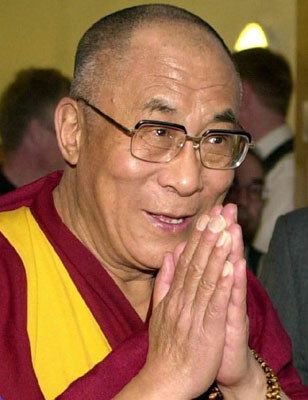
HH XIV Dalai Lama at Emory University


His Holiness XIV Dalai Lama, the spiritual and secular leader of Tibet in exile, came to Emory University from October 17 through October 19, 2010. Emory University runs a science initiative with His Holiness in India in order to integrate western science into the traditional monastic education for monks and nuns living in the community-in-exile.

His Holiness has always been known for his cosmopolitanism, and feels that this long term project is crucial for improving understanding of the world from both religious and scientific worldviews. This project is extremely important and proves how scientific and religious worldviews are compatible and able to enhance each other’s understanding of the world around us. The integration of two different disciplines and approaches creates a much more holistic way to understand how human beings function and interact with their surrounding environment.

Below, please watch the press conference with His Holiness and the president of Emory University. In addition to answering questions on the interaction between religion and science, His Holiness addresses the relationship between spirituality and secularism, politics, and the importance of fostering open societies.


Furthermore, His Holiness, humanitarian/actor Richard Gere, and Pulitzer Prize-winning writer Alice Walker discuss the interaction between art and spirituality. Although it is a short clip, it raises some interesting points and offers a new approach to art.

Monday, February 22, 2010

Interesting Discussion on HH XIV Dalai Lama's Visit

Democracy Now! hosted a very interesting discussion with Robert Barnett, director of the Modern Tibetan Studies Program at Columbia University. The discussion focuses around several issues involving Tibet and His Holiness, including democratization, international security, economics, and water politics. The interview is approximately 11 minutes long but worth watching in its entirety.


Tuesday, October 7, 2008

New Precedent Could Lead to Release of More Prisoners from Gitmo

A new precedent could release more prisoners from Guantanamo Bay, and it only took 7 years to realize that you actually can't carry out a racially and prejudiced policy of holding people indefinitely and without charges, torturing them in the meanwhile. Please check out the article in its entirety from the Associated Press below.

Judge: Let Chinese Muslims from Guantanamo into US

By HOPE YEN, Associated Press Writer

WASHINGTON - A federal judge ordered the Bush administration Tuesday to immediately free 17 Chinese Muslims from Guantanamo Bay into the United States, rebuking the government in a landmark decision that could set the stage for the release of dozens other prisoners in Cuba.

U.S. District Judge Ricardo M. Urbina said it would be wrong for the government to continue holding the detainees, known as Uighurs (WEE'-gurz), who have been jailed for nearly seven years, since they are no longer considered enemy combatants. Over the objections of government lawyers who called them a security risk, Urbina ordered their release in Washington D.C. by Friday.

"Because the Constitution prohibits indefinite detentions without cause, the continued detention is unlawful," Urbina said in a ruling that brought cheers and applause from a standing-room only courtroom filled with dozens of Uighurs and human rights activists.

He also ordered a hearing for next week to decide where the Uighurs should be permanently settled. Until then, members of the Uighur community in the D.C. area have offered to take them in and will help care for them.

Justice Department attorney John C. O'Quinn said the government would consider whether to appeal the decision. O'Quinn's request to delay the decision pending a possible appeal was denied Tuesday by Urbina, who said the detainees had waited long enough.

At issue is the scope of a federal judge's power to order the release of a Guantanamo prisoner, who was unlawfully detained by the U.S. but who cannot be sent back to his homeland. The Uighurs, who are Turkic-speaking Muslims in western China, have been cleared for release from Guantanamo since 2004 and ordinarily they would be sent home.

But the Uighurs cannot be sent back to China where they are considered terrorists and could be tortured, and the Bush administration says no country is willing to accept them. Albania accepted five Uighur detainees in 2006 but has since balked on taking others due partly to fears of repercussions with China.

Urbina's decision also has broader implications for the future of the Guantanamo prison, which the Bush administration has said it would like to shut down after "working with other countries to take people back under the right circumstances." A federal judge is set later this month to hold hearings on other Guantanamo prisoners challenging their detention as so-called enemy combatants.

About 20 percent of about 250 detainees who remain at the military prison fear torture or persecution if they return to their home countries, according to the New York-based Center for Constitutional Rights, raising similar questions as to where they should go if other countries refuse to take them. The U.S. has long maintained they should stay at Guantanamo.

"How many times does the Bush administration need to be told that detainees are entitled to essential rights? All the remaining detainees in Guantanamo Bay must be either charged and tried or released immediately," said Larry Cox, executive director of Amnesty International USA.

On Tuesday, the Bush administration argued a federal judge did not have the power to order the release of a foreign-born detainee into the U.S., saying would undercut immigration laws that dictate how foreigners are brought into the country. Until a country accepts the Uighurs, they would stay in special housing that includes TVs, air-conditioning and recreational activities such as soccer, tennis and volleyball, government attorneys said.

O'Quinn also said federal judges had no power to order the detainees' release and should defer to the executive branch, who he said would be in a better position in light of the delicate relations with China. In Beijing Tuesday, before Urbina's ruling, the government demanded that all Uighurs held at Guantanamo be repatriated to China.

"The court should be circumspect because of the potential for interference with foreign relations," O'Quinn said.

Sabin Willett, an attorney for the Uighurs, countered: "I've never heard anyone argue our relations with other nations are a basis for holding someone."

The Uighurs have been at Guantanamo Bay, a naval prison in Cuba, since the U.S. military took custody of them in Pakistan and Afghanistan in 2001.

Chinese Foreign Ministry spokesman Qin Gang said before Tuesday's court hearing that the Uighurs are suspected of being members of the East Turkestan Islamic Movement, which the United States lists as a terrorist organization.

"China has urged the U.S. to repatriate these Chinese terrorist suspects to China on many occasions. We hope the U.S. will take our position seriously and repatriate these persons to China sooner rather than later," he said.

A spokesman at the Chinese Embassy in Washington did not immediately respond to a request for comment about Urbina's order.

Uighurs are from Xinjiang — an isolated region that borders Afghanistan, Pakistan and six Central Asian nations — and say they have been repressed by the Chinese government. China has long said that insurgents are leading an Islamic separatist movement in Xinjiang.

Rebia Kadeer, president of the World Uighur Congress, called the decision a victory for oppressed Uighurs in China.

"This is our destiny. This our people's win. This concerns our freedom. China accuses us of being terrorists, but we are not," she said through a translator as other Uighurs in the courtroom cried for joy.

____________________

As the saying goes, one man's terrorist is another man's freedom fighter. All in all a great ruling by the federal judge and hopefully, the United States can work out an arrangement where the detainees will no longer face the daily threat and reality of torture at the hands of any country.


Thursday, July 31, 2008

Headlines: 31 July 2008

*Note: The New York Times may be changing their website, and you may have to register/login to see these articles.

Monday, July 21, 2008

Headlines: 21 July 2008

Friday, April 25, 2008

China to Meet with HH XIV Dalai Lama

In a surprising announcement today, China's government agreed to meet with an envoy of His Holiness XIV Dalai Lama, after calls from leaders around the globe for dialogue between the two governments.

While the Chinese government has not released a date for when the meetings will take place or who they will involve, "The Xinhua report said China had committed only to a meeting and appeared to attach routine conditions for opening a dialogue with the Dalai Lama, including a demand that he stop plotting for Tibet's independence 'so as to create conditions for talks.'"

However, as reported by the Associated Press:
The prime minister of the Tibetan government-in-exile said he had not received any official Chinese confirmation of the report. He sounded a cautious note on any potential talks.

"The Dalai Lama is always open to have a dialogue but the present circumstances in Tibet do not appear to be an appropriate platform for a meaningful dialogue," Samdhong Rimpoche told The Associated Press in the Indian hill town of Dharmsala.
However, even though the announcement is not specific in the details of these talks and the conditions for them, the fact that China is finally opening itself to talk with perhaps the only man who really does know what to do in order to fix the Sino-Tibetan crisis, this is progress. Hopefully, the Chinese government will back up these statements with positive action and take steps to stop the genocide it commits against "its own people" in its "harmonious society."For the article, click here.


Thursday, April 24, 2008

Future of Tibet

Today, the Senate Foreign Relations Subcommittee of East Asian and Pacific Affairs held a hearing entitled "The Future of Tibet" where Sen. Barbara Boxer, among others, announced their plans to develop a plan of action to resolve the Sino-Tibetan Crisis.

While this meeting was overall a very productive dialogue on the serious need for a solution now, if the current administration does not act quickly to enact this plan of action (the Bush Administration has already failed to follow the recommendations the committee gave earlier in the year), the United States will lose some of the key leverage it has gained due to the Beijing Summer Olympics.

All of the witnesses provided excellent testimonies and there were many intelligent questions the senators asked. Among these were John Negroponte, Deputy Secretary of State; Richard Gere, chairman of the International Campaign for Tibet; Lodi Gyari, special envoy of His Holiness XIV Dalai Lama; and Lobsang Sangay of the East Asian Legal Studies Program at Harvard Law School. With the obvious, unanimous bipartisan agreement on the necessary steps that need to be taken to resolve this crisis within China, it is quite reasonable to expect far more genuine efforts on behalf of the Congress and the Bush administration to seriously address this issue and work with the Chinese government to create a mutually beneficial solution.

Part of the testimony, courtesy of YouTube and the Associated Press. For full coverage, see links below the video clip.


Click here for the Subcommittee's page for the hearing.

Click here to watch the hearing in its entirety.

Click here to read Lodi Gyari's full testimony.

Click here to read Richard Gere's full testimony.

Wednesday, April 9, 2008

12 Suggestions for Dealing with the Tibetan Situation

These are 12 suggestions presented in a petition signed by a number of prominent Han Chinese intellectuals as posted on Human Right Watch's webpage. This is the type of dialogue, from extremely courageous individuals, that will lead to a mutually beneficial solution in a tumultuous region.

Twelve Suggestions for Dealing with the Tibetan Situation

by Some Chinese Intellectuals

Editor's Note: On March 12, a group of Chinese intellectuals including prominent dissidents, lawyers, rights activitise and writers circulated a petition supporting calls for an independent investigation in Tibet by the United Nation, and urging the government to reconsider its policies in Tibet, so as to work toward "national reconciliation, not continue to increase divisions between nationalities." Two of the signatories, the tibetan poetess Woeser and the writer Wang Lixiong, have reported being under close police surveillance at their home since the beginning of the protests on March 10. Woeser maintains a blog, in Chinese.

1. At present the one-sided propaganda of the official Chinese media is having the effect of stirring up inter-ethnic animosity and aggravating an already tense situation. This is extremely detrimental to the long-term goal of safeguarding national unity. We call for such propaganda to be stopped.

2. We support the Dalai Lama’s appeal for peace, and hope that the ethnic conflict can be dealt with according to the principles of goodwill, peace, and non-violence. We condemn any violent act against innocent people, strongly urge the Chinese government to stop the violent suppression, and appeal to the Tibetan people likewise not to engage in violent activities.

3. The Chinese government claims that “there is sufficient evidence to prove this incident was organized, premeditated, and meticulously orchestrated by the Dalai clique." We hope that the government will show proof of this. In order to change the international community’s negative view and distrustful attitude, we also suggest that the government invite the United Nation’s Commission on Human Rights to carry out an independent investigation of the evidence, the course of the incident, the number of casualties, etc.

4. In our opinion, such Cultural-Revolution-like language as “the Dalai Lama is a jackal in Buddhist monk’s robes and an evil spirit with a human face and the heart of a beast ” used by the Chinese Communist Party leadership in the Tibet Autonomous Region is of no help in easing the situation, nor is it beneficial to the Chinese government’s image. As the Chinese government is committed to integrating into the international community, we maintain that it should display a style of governing that conforms to the standards of modern civilization.

5. We note that on the very day when the violence erupted in Lhasa (March 14), the leaders of the Tibet Autonomous Region declared that “there is sufficient evidence to prove this incident was organized, premeditated, and meticulously orchestrated by the Dalai clique.” This shows that the authorities in Tibet knew in advance that the riot would occur, yet did nothing effective to prevent the incident from happening or escalating. If there was a dereliction of duty, a serious investigation must be carried out to determine this and deal with it accordingly.

6. If in the end it cannot be proved that this was an organized, premeditated, and meticulously orchestrated event but was instead a “popular revolt” triggered by events, then the authorities should pursue those responsible for inciting the popular revolt and concocting false information to deceive the Central Government and the people; they should also seriously reflect on what can be learned from this event so as to avoid taking the same course in the future.

7. We strongly demand that the authorities not subject every Tibetan to political investigation or revenge. The trials of those who have been arrested must be carried out according to judicial procedures that are open, just, and transparent so as to ensure that all parties are satisfied.

8. We urge the Chinese government to allow credible national and international media to go into Tibetan areas to conduct independent interviews and news reports. In our view, the current news blockade cannot gain credit with the Chinese people or the international community, and is harmful to the credibility of the Chinese government. If the government grasps the true situation, it need not fear challenges. Only by adopting an open attitude can we turn around the international community’s distrust of our government.

9. We appeal to the Chinese people and overseas Chinese to be calm and tolerant, and to reflect deeply on what is happening. Adopting a posture of aggressive nationalism will only invite antipathy from the international community and harm China’s international image.

10. The disturbances in Tibet in the 1980s were limited to Lhasa, whereas this time they have spread to many Tibetan areas. This deterioration indicates that there are serious mistakes in the work that has been done with regard to Tibet. The relevant government departments must conscientiously reflect upon this matter, examine their failures, and fundamentally change the failed nationality policies.

11. In order to prevent similar incidents from happening in future, the government must abide by the freedom of religious belief and the freedom of speech explicitly enshrined in the Chinese Constitution, thereby allowing the Tibetan people fully to express their grievances and hopes, and permitting citizens of all nationalities freely to criticize and make suggestions regarding the government’s nationality policies.

12. We hold that we must eliminate animosity and bring about national reconciliation, not continue to increase divisions between nationalities. A country that wishes to avoid the partition of its territory must first avoid divisions among its nationalities. Therefore, we appeal to the leaders of our country to hold direct dialogue with the Dalai Lama. We hope that the Chinese and Tibetan people will do away with the misunderstandings between them, develop their interactions with each other, and achieve unity. Government departments as much as popular organizations and religious figures should make great efforts toward this goal.


Signatures:

Wang Lixiong (Beijing, Writer)
Liu Xiaobo (Beijing, Freelance Writer)
Zhang Zuhua (Beijing, scholar of constitutionalism)
Sha Yexin (Shanghai, writer, Chinese Muslim)
Yu Haocheng (Beijing, jurist)
Ding Zilin (Beijing, professor)
Jiang peikun (Beijing, professor)
Yu Jie (Beijing, writer)
Sun Wenguang (Shangdong, professor)
Ran Yunfei (Sichuan, editor, Tujia nationality)
Pu Zhiqiang (Beijing, lawyer)
Teng Biao (Beijing, Layer and scholar)
Liao Yiwu ()Sichuan, writer)
Wang Qisheng (Beijing, scholar)
Zhang Xianling (Beijing, engineer)
Xu Jue (Beijing, research fellow)
Li Jun (Gansu, photographer)
Gao Yu (Beijing, journalist)
Wang Debang (Beijing, freelance writer)
Zhao Dagong (Shenzhen, freelance writer)
Jiang Danwen (Shanghai, writer)
Liu Yi (Gansu, painter)
Xu Hui (Beijing, writer)
Wang Tiancheng (Beijing, scholar)
Wen kejian (Hangzhou, freelance)
Li Hai (Beijing, freelance writer)
Tian Yongde (Inner Mongolia, folk human rights activists)
Zan Aizong (Hangzhou, journalist)
Liu Yiming (Hubei, freelance writer)

The rules of signing one’s name are as follows:
1. Open signature
2. Only accept the signature with one’s own name or commonly used pen name
3. One needs to include one’s name, the province of one’s current residence, occupation
4. The e-mails for one to send one’s signature: xizangwenti@gmail.com; xiamixiami@hotmail.com; degewa@gmail.com.

Saturday, March 15, 2008

"War is Peace"

Leave it to the Chinese government to restrict protests, then twist events, and intensify martial law, while simultaneously denying their crimes. This time, the Chinese government has turned a week of the most intense protesting seen in Tibet and the rest of the world in decades into yet another myth. As Jim Yardley of The New York Times reports,
BEIJING — Thousands of Buddhist monks and other Tibetans clashed with the riot police in a second Chinese city on Saturday, while the authorities said they had regained control of the Tibetan capital, Lhasa, a day after a rampaging mob ransacked shops and set fire to cars and storefronts in a deadly riot.

Residents in Lhasa, the Tibetan capital, walked through Barkhor, an ancient part of the city where protesters had set fire to a shop and several vehicles on Friday. Conflicting reports emerged about the violence in Lhasa on Friday. The Chinese authorities denied that they had fired on protesters there, but Tibetan leaders in India told news agencies on Saturday that they had confirmed that 30 Tibetans had died and that they had unconfirmed reports that put the number at more than 100.
Chinese authorities defended their response to the violence in Lhasa. “We fired no gunshots,” said Qiangba Puncog, chairman of the Tibet Autonomous Regional Government, according to state media.

But Tibetan advocacy groups and witnesses in Lhasa offered contradictory accounts. The Tibetan government in exile said at least 30 Tibetans died in the protests, according to Agence France-Presse. Witnesses told Radio Free Asia, the nonprofit news agency financed by the United States government, that numerous Tibetans were dead. A 13-year-old Tibetan boy, reached by telephone, said he watched the violence from his apartment and saw four or five Tibetans fall to the ground after military police officers fired upon them.
The protests also disprove yet another lie propagated by Chinese authorities.
The tumult also undercuts a theme regularly promoted by China’s propaganda officials — that Tibetans are a happy minority group, smoothly integrated into the country’s broader ethnic fabric.
It is sad that such a peaceful people simply desiring freedom and democracy are only noticed as endangered by a repressive government when they are provoked to lashing out in violence against an oppressor infinitely larger than themselves. As Wolf Blitzer reports,


Clearly, people across the world are calling for action to prevent the genocide China has engaged in since 1949 that has been largely ignored by the international community. The plight of the Tibetan people is one that is rooted in the minds of all people, regardless of their origin. As a promoter of democracy and a nation vowed to uphold the Geneva Conventions, the United States is in a key position of influence to encourage and persuade the Chinese government to stop its murderous campaigns and allow Tibet to uphold its culture and the democracy they desire through meaningful autonomy.

Or, better yet, independence.

For the rest of the story, click here.

For more by Jim Yardley, click here.


Friday, March 14, 2008

And Now For Something Completely Different

It may be a little absurd, but an obvious Obama supporter has created three websites about the candidates: Barack Obama is a nice guy, Hillary Clinton is rude, and John McCain is old.

My favorite? "Hillary Clinton wants you to know the Italians plagiarized pasta from the Chinese."

FREE TIBET! STOP GENOCIDE!

Monday, March 10th, 2008, marked the 49th anniversary of the failed 1959 Tibetan uprising against Chinese invasion, oppression, and genocide. While demonstration of any kind against the People's Republic of China (PRC) in the Tibetan Autonomous Region (TAR) is illegal and punishable by imprisonment, torture, and death, every year, both in the TAR and around the world (Thank You, Nepal), people bravely speak out against China's crimes. This year, the protests broke into riot in Lhasa, resulting in gunfire and intensification of the already harsh martial law.

This year however, with the upcoming Beijing 2008
Olympics, China has been under pressure to account for its human rights violations domestically as well as its involvement in support of the Khartoum government in Sudan. The Chinese government has tried to present China as a unified nation and has ignored its gross human rights abuses. On October 17, 2007, His Holiness XIV Dalai Lama was awarded the Congressional Gold Medal, the United States' highest civilian honor, by President Bush (probably the only good thing the President has and will ever do in his lifetime and although the two have met in private several times, this is the first time Bush has agreed to publicly do so). The Chinese government "called the ceremony an affront to the budding relations between the countries." While the Chinese government has attempted to paint His Holiness as a separatist, His Holiness strongly advocates for more democracy and meaningful autonomy in Tibet. The Chinese government has claimed that Tibet has always been a part of China even though all historical evidence proves otherwise.
In addition to the human rights and Geneva Convention violations that the Chinese government commits against the Tibetan people, China has implemented plans for complete ethnic/cultural genocide of the Tibetan people since China's unlawful invasion led by Mao Zedong in 1949. Some of the largest projects today that will result in this are the Quinghai-Tibet Railroad, already under construction, and the Quinghai Airport, both expected to bring in even larger numbers of Chinese into Tibet (where they currently outnumber Tibetans) and further eradicate Tibetan culture. The Chinese government states that the railroad's first run is good because "not only national pride is on the rise, but also infrastructure convenience for Sino-South Asian trade boom is largely improved" while admitting through its ambassadors that the TAR is the poorest region in China by far and contributes the least to China's economy. The Quinghai-Tibet Railroad will extend from Lhasa, the capital of the Tibet Autonomous Region (TAR), to Xigaze, near the boarders of India, Bhutan, and Nepal. The new line is expected to open in 2010 and carry seven million tons of cargo per year and eventually increase that amount to ten million tons at speeds of at least 120 km/h.

The opening of a new extension to this railroad, especially near these specific boarders, is crucial to the survival of the Tibetan people. Because of the legal system in the People’s Republic of China (PRC), Tibetans attempting to flee the TAR (most heading to Dharamsala, India) can be arrested and imprisoned. If escaping Tibetans get out of the TAR and PRC and into Nepal, they can still be arrested until they can make it to Katmandu, Nepal’s capital, and obtain official refugee status. Without those papers, they can be arrested by Nepalese officials; under King Gyanendra’s rule, Nepal and the PRC were allies so Tibetans arrested by Nepalese police were routinely handed over to PRC officials (1). However, with Maoist rebels in Nepal becoming integrated in a new political system in Nepal after a ten year war, it appears as though the PRC is unsure of what the outcome will be and if it will be able to maintain that relationship with Nepal. On February 12, 2007, a report was released by the International Campaign for Tibet documenting the passage from the TAR into exile (2). In 2006, the issue received international attention when a 25 year old Tibetan nun and other unarmed civilians were shot attempting to make a pilgrimage to HH XIV Dalai Lama. With a new railway opening near the boarders of the countries that Tibetans flee into, the PRC will be able to arrest far more Tibetans without the help of Nepalese authorities.

This situation of the railroads is reminiscent of the American railroads into the Great Plains. The expansion of rail lines into the western part of the United States led to a tremendous influx of American settlers and led to the destruction of the American Indians and their cultures. There is much evidence to suggest that the same scenario is occurring presently within the TAR. When the Qinghai-Tibet railroad first began construction, it was expected to be a major transportation route for trade and tourists, thus making Tibetans minorities in their homeland and contributing to further destruction of their culture (3). The Qinghai-Tibet Railroad was simply another way for the PRC to try to destroy a group of people and a second line opening without substantial protest from the rest of the world will have horrible repercussions for the Tibetan people and the world will witness the preventable elimination of a unique group of people and their culture.

With the Beijing 2008 Olympics around the corner, the opportunity to confront China about its genocidal policies, both domestically in Tibet and abroad in Darfur, is clear and necessary to show the commitment a country makes when signing the Geneva Conventions and joining the United Nations. As an economic tiger that may soon overtake the United States as the leading global superpower, an unwavering commitment to human rights and democracy is needed now more than ever before. While the United Nations can enforce binding economic sanctions or follow Spain's brave example of prosecuting Chinese leaders for war crimes, the international community can no longer continue to ignore the worst genocide of modern times.


(1) Sarkar, Sudeshna. Telugu Portal, 2/9/07, “Richard Gere to Launch Report on Tibetan Exodus from China.”

(2) International Campaign for Tibet, 2/8/07, “New Report Documents Dangerous Flight into Exile for Tibetans.”

(3) Yardley, Jim. New York Times, September 15, 2003, “Trying to Reshape Tibet, China Sends in the Masses”

Tuesday, February 26, 2008

It's All in the Paradigm

I have to give a shout out to the Drudge Report (http://www.drudgereport.com/) for this one.

Anybody with at least slight misgivings about all the fuss regarding global warming might be interested to know that, according to a column by Lorne Gunter in the NationalPost.com on February 25th (http://www.nationalpost.com/opinion/columnists/story.html?id=332289), the northern hemisphere is currently experiencing an uncharacteristically cold winter. The article reports that based on data from the US National Climatic Data Center, the average temperature for American cities in January '08 was three tenths of a degree Fahrenheit cooler than the average of that month for the twentieth century.

Whats more, Toronto was smashed with seventy centimeters of snow two weeks into this month, breaking the record of 66.6 cm. That record dates back to 1950, and was the total for the entire month - not just the first half.

Asia has been hit hard, as well. China is experiencing the worst winter there in a century, and the article says cities there have been brought to a standstill. Power lines were brought down by snow and ice, and conditions were too harsh to hazard any repairs, leaving residents with out power for as long as several weeks. According to the article, with all things considered, Siberia, Mongolia, China, in addition to northern North America, are covered in more snow than those continents had been since 1966.

Finally, the most notable and important tidbit concerns that arctic sea ice that we hear so much about. Records indicate that substantial amounts of that ice have been lost due to global-warming-induced melting. In fact, melting has caused the reduction of the ice to the lowest point on record. However, you might be intrigued to learn that these records only date back to 1972. Surely, thirty-six years is nowhere near an adequate amount of time to determine a trend for as grand a system as global climate.

Of course, somebody is going to tell me that after the warming, there's going to be cooling. After all, that's how it happened in The Day After Tomorrow. But according to Bernard Goldberg, author of Crazies to the Left of Me, Wimps to the Right (HarperCollins, 2007), the debate over global warming hasn't always been about global warming. In fact, in regards to the "global climate change" debate, as you may have noticed it is increasingly called as of late, a study by the Business and Media Institute shows that the New York Times and Time magazine have interchangeably run stories about global cooling and global warming for more than a century, beginning with cooling in 1895, warming in 1933, back to cooling as late as 1975, and back to the warming paradigm, which we are currently hearing about (see pages 67-69). In short, they don't know what they are talking about, and there is no way for anyone to be sure. Earth's weather makes up such a complicated system that it is folly to believe that any trends could be identified in a thirty-year sample, despite the argument from some.

My point isn't that we're about to tumble head first into an ice age. It's that Mother Nature has far more up her sleeve than we can correctly evaluate in such a short time span. Before we make stupid decisions regarding the need to reduce our carbon footprint (and how to do so), following the example of a man who buys "carbon credits" from his own company, we need to realize that there are much larger natural forces at work. Surely, it would be egotistical folly to say that our understanding of said forces can be derived from slivers of time, taken as samples that are supposedly representative of the entire climatic history of our planet.