The Cold War had it right – those Communists sure are sneaky and not to be trusted, least of all with being original. While doing some completely unrelated research, I stumbled across some acts of true evil that must be revealed.
First published in the Wall Street Journal, Gordon Fairclough reveals that North Korea has been flooding the U.S. market with counterfeit cigarettes. While this is a relatively old story (the original article being published in 2006), Center for a New American Security (CNAS)’s newest report highlights the Korean counterfeit cigarettes case study as an instance in which sanctions were an effective means of coercive diplomacy. As CNAS’s January 2011 report described, “private industry estimates that North Korea’s gross revenue from counterfeit cigarettes alone amounts to between 550 – 700 million dollars per year, making the DPRK the number two counterfeit cigarette producer in the world (after China)” (Asher et. al. 34).North Korea produced several different brands of counterfeit cigarettes, including Marlboros, to such a high quality that products seized in Miami “even included forged pamphlets urging smokers to visit a Web site to find information about the health dangers of cigarettes and the admonition, ‘Don't Litter’ on the side of the box. Some also have copies of state tax stamps.”North Korea isn’t the only Red country to be ripping off original American products and trying to pass them off to the rest of the world. On January 23, 2011, China released a video of an air force drill that was remarkably similar to a scene in Top Gun. That film is awful enough, the world doesn’t need someone else trying to bring it back. The final scene of the film was spliced into the drill footage and aired on state television, CCTV.Although the film was taken down shortly afterwards, the Wall Street Journal ran the footage from Top Gun and the Chinese air force drill side by side. Note to China:If you’re going to try to make your military look all cool and powerful, don’t use a movie made 25 years ago to try to make your point and hope no one will notice. If you are going to steal film footage and splice it into military videos, at least choose a good movie.
The recent thread of WikiLeaks sheds light on a foreign policy problem of nuclear proportions.
In the past week, thousands of important documents and information have been leaked from various U.S. government agencies on WikiLeaks.The leaks are controversial, not only for their sheer number, but for release of cables and conversations between U.S. and very high-ranking officials from other countries.The leaks even prompted Barack Obama to enact new sanctions on Iran today.These sanctions blacklist 10 Iranian businesses connected to the Islamic Republic’s national bank and shipping lines, as well as five executives of these businesses.
On Monday, November 29, 2010, Iranian President Mahmoud Ahmadinejad referred to the leaked documents as “American psychological warfare that would not affect his country’s relations with other nations.”While Ahmadinejad and his administration might be crediting the U.S. bureaucracy with a bit too undeserved organizational skills by calling the leaks “organized to be released on a regular basis,” the leaked documents definitely confirm prevalent theories about the relations between Iran and its Arab gulf state neighbors and its aspirations for regional hegemony.
It is well-known that Saudi Arabia and Iran are vying for regional hegemony, with Iran’s relative conventional military power and sphere of influence giving it a strong edge over the Saudi kingdom.Not only does this allow Iran to influence the trajectories of Iraq and Afghanistan, thus extending its regional influence, its status as a regional hegemon tips the regional balance of power away from Saudi Arabia and other Arab states that have alliances with the United States.Feeling threatened by such expanding Iranian influence even in the face of decades of sanctions, it is hardly surprising that the Saudi regime harbors strong animosity for the Khamenei’s.However, it was previously unknown that the Saudi-Iranian enmity went so far that Saudi Arabian King Abdullah repeatedly begged the United States to “‘cut off the head of the snake’ by launching military strikes to destroy Iran’s nuclear program,” one of the final pieces of Iranian policy that would enable it to secure the role of an undisputed regional hegemonic power.In order to curb Iranian influence, the United States announced in October of 2010 that it will sell $60 billion worth of military aircraft to the Saudi regime.
Saudi Arabia is not the only gulf state feeling pressure to eliminate Iranian challenges to the current balance of power.King Hamad bin Isa al-Khalifa of Bahrain argued in favor of forceful action by any means necessary to eliminate the Iranian nuclear program.Bahrain, a tiny kingdom on the Persian Gulf that is home to the American Fifth Fleet’s naval base, has been feeling Iranian pressure and influence for years.In July of 2007, Iranian advisor to Khamenei Hossein Shariatmadari stated that “The public demand in Bahrain is the reunification of this province with its motherland, the Islamic Iran.”An unnamed senior Omani military official (Oman being the country that helped secure the release of American Sarah Shourd from Evin Prison), is cited in a correspondence as unable to decide which would be worse – “a strike against Iran’s nuclear capability and the resulting turmoil it would cause in the Gulf, or inaction and having to live with a nuclear-capable Iran.”In a December 2005 meeting with American military commanders, United Arab Emirates defense chief and crown prince Mohammad bin Zayed of Abu Dhabi lobbied for American military action against Iran either “this year or the next.”Bin Zayed also expressed fears of a nuclear Iranian state, declaring that “any culture that is patient and focused enough to spend years working on a single carpet is capable of waiting years and even decades to achieve even greater goals.”
While Cenk Uygur, host of The Young Turks, on MSNBC Live is not the best interviewer, the answers provided by Doctors Juan Cole and Trita Parsi in this brief interview are very informative and discuss the fears of changing regional balances of power.
Meanwhile, tensions in the region build as Israeli public opinion and Prime Minister Benjamin Netanyahu perceive a growing, intolerable Iranian nuclear threat.Ehud Barak and prominent members of the Israeli intelligence community argue that Iran is not an existential threat nor is Israel the primary target of Iranian ambitions.Even Syrian president Bashar al-Assad argues that Iran will not use a nuclear weapon against Israel, stating that “an Iranian nuclear strike against Israel would result in massive Palestinian casualties, which Iran would never risk.”However, Iranian weapons purchases from North Korea does little to convince the public and Israeli politicians writ large of this understanding.Netanyahu views the WikiLeaks as something positive for Israel, confirming his suspicions about Iranian nuclear ambitions and showing the extent to which Israel and Arab states share a strong mutual interest in preventing Iranian hegemonic aspirations.
Tensions continue to escalate between these states and power blocs in the Middle East.Yesterday, two prominent Iranian nuclear scientists, both professors at Tehran’s Shahid Beheshti University, were attacked in different parts of Tehran.Assailents on motorcycles managed to attach and detonate magnetized car bombs to the cars of scientists Majid Shahriari and Fereydoun Abbasi, the former killed and the latter injured with his wife.Shahriari was involved in a major project with Iran’s nuclear agency, and Abbasi is a member of the Islamic Revolutionary Guard Corps (IRGC) and listed as one of several involved in secret nuclear activity in a 2007 U.N. resolution.Abbasi was formerly an expert for Iran’s Defense Ministry and a top specialist in nuclear isotope separation.The Iranian regime currently blames Israel and the United States for orchestrating these attacks.Intelligence analysts blame Mossad for the 2007 death of top Esfahan uranium plant scientist Ardeshire Hassanpour.In January of 2010, Massoud Ali-Mohammadi was also killed, but it is unclear whether his death was related to his support of Mir Hossien Mousavi or an Israeli/American operation; he also died in a car bombing similar to that of Shahriari.
The WikiLeaks available thus far clearly confirm the fears of Arab gulf states and seem to perpetuate Israeli public opinion and Netanyahu’s threat perceptions of Iran.In moving forward from the latest sanctions on Iran, the United States must decide how to manage these states’ interests to balance with its own in the Middle East and avoid yet another military conflict that would have, in Barak’s words, “unacceptable collateral damage,” on all sides.
I am aware that this is sort of old news.However, since I have been busy lately and this is still an important on-going problem, I will write my blog post about it anyway.This began as a reaction to an op-ed in the New York Times, by Princeton doctoral candidate Elliot Hen-Tov and Princeton professor of Near Eastern Studies, Bernard Haykel.With the recent tightening of the newest sanctions on Iran this past Thursday, July 1, 2010, it is important to revisit this issue.
First, back to the op-ed from last month.In order to make any real headway on US-Iran relations, it is absolutely essential that each side really understand the other.For prominent scholars of prestigious universities, this also holds true.Which is why this article must be revisited – the Princeton people have it wrong.Their main assertion is that “Iran… stands to lose much influence as Turkey assumes a surprising new role as the modern, democratic and internationally respected nation willing to take on Israel and oppose America.”While parts of this statement are correct, the article represents a flawed understanding of Iranian politics and its relationship to the United States.Principally, it does not really matter for the United States (or Israel for that matter) what type of fiery rhetoric Iranian president Mahmoud Ahmadinejad uses – it is generally not directed at American or Israeli audiences anyway.The poll quoted by the authors, although irrelevant to their article, proves this point.The two major regional powers in the Middle East are Saudi Arabia, whose regime is a strong US ally, and Iran, whose regime clearly is not.When Ahmadinejad makes his statements in “support” of the Palestinian cause, he also does so bearing in mind that this can also play on Saudi Arabia’s weaknesses.Iran can claim to be the true supporter of Muslims in peril (despite a substantial number of Palestinians being of Christian or other backgrounds) while simultaneously making the Saudi regime appear weak to its people by alluding to its close relationship to the USA.In this manner, the Iranian regime hopes to remain dominant in the region over Saudi Arabia and the other Arab states.
Ahmadi-casual-Friday-nejad is not some “irrational, rouge leader” as realist IR theory would have us believe.The Iranian government’s support of Israel is mostly a domestic campaign to give the regime the appearance of standing up to the hegemonic rule of the United States and then Israel.Given the vastly superior military forces of both the USA and Israel, Iran would not risk attacking Israel.So, while these authors note that Turkey is seen by Palestinians as a much closer ally than Iran, it is crucial to understand that Iran’s political exploitation of this crisis is mostly for the purpose of bolstering domestic support for the regime and is targeted to domestic and Saudi, not international, audiences.
Secondly, I take issue with the Islam in Turkey being called “more liberal and enlightened.”Again, this is a fundamental mis-characterization of reality.While Saudi Arabia and Iran might be self-proclaimed Islamic states and Turkey a self-proclaimed secular state, the notion that any one regime is any more or less liberal/enlightened than the other is absurd when further examining their actual policies.In Iran, women are obligated to wear hijab at all times; in Turkey, there are laws making it illegal to wear the veil in some public places.Forcing people to appear secular is no better than forcing people to appear pious – these are merely two extreme ends of the spectrum.In a liberal Islam, it would seem that one would have the ability to choose without being compelled towards either end of such a spectrum.Furthermore, the fiercely secular and authoritarian policies enacted by the Turkish government can be just as bad as the authoritarian policies of Iran.
Returning to the sanctions and Turkey’s vote (along with Brasil), it is not really that much “against the United States” for Turkey to vote against the sanctions.The United States, while allies with Turkey, is far stronger allies with Saudi Arabia in the Middle East.Saudi Arabia, with the United States’ help, has stronger military and economic ties to the USA, and it is closer to the other Arab states in the Middle East than Turkey is.With Turkey looking to gain membership to the European Union, it is smart to keep its options open for markets in the Middle East for the EU, but if push came to shove for the United States, I would bet that it would retain Saudi Arabia as its ally over Turkey.Anyway, Iran and Saudi Arabia are focused on each other and Turkey is focused on the EU, so it really does not matter for Iran what Turkey says – although its vote was nice anyway.
As stated in the BBC article, the sanctions imposed in June were not very substantial.This would suggest that the Obama administration is just reacting initially to [uneducated] domestic pressures in Congress to appear to be doing something about the Iranian nuclear program.While it is good that these sanctions were not substantial, it is also extremely damaging to any potential for improving diplomatic relations between the United States and Iran, only serving to prove Ahmadinejad correct when he claims that the United States is really not interested in changing the status quo.Bolstering domestic support for the current Iranian regime is the last thing that the United States should be doing.
In a more recent development, Nom Chomsky acknowledges that Iran poses a serious threat of nuclear proliferation in the Middle East, despite citing sources earlier on in the article that discuss Iran’s relatively weak military capabilities; he just proposes different solutions instead of the United States “reinforcing [its] control of the vital Middle East oil-producing regions.”However, with Iran, this is not a valid argument either.Georgetown scholar Mehran Kamrava and University of Colorado professor Nader Hashemi are both of the opinion that Iran does not want to actually acquire a nuclear weapon.If Iran were to obtain the technology and actually produce a nuclear weapon, this would push Iran into a whole new realm of military prowess in which it would find itself on the bottom, easily bested several times over by the United States, Israel, etc.In other words, Iran can be a relatively strong conventional military power in the region, especially when compared to Saudi Arabia’s military on its own (aka minus USA support), but it would lose this advantage if it entered the nuclear arena and would find itself in a situation it cannot win.Thus, even the idea that Iran’s nuclear program to gain such knowledge is the most serious threat is absurd.The best solution would be to focus on finding common ground and interests within the Middle East between Iran and the United States (two really good examples here are Afghanistan and Iraq… hint, hint State Department) and go from here to rebuild diplomatic ties.
Speaking of best solutions, July 1st was not one of these.The New York Times reports that President Obama signed a law in one of the few moments of consensus in Congress during his administration that “imposes penalties on foreign entities that sell refined petroleum to Iran or assist Iran with its domestic refining capacity. It also requires that American and foreign businesses that seek contracts with the United States government certify that they do not engage in prohibited business with Iran.”As stated several times before, the solution is to OPEN not close relations with Iran.This means diplomatically and economically. As Ahmadi-I-say-crazy-things-that-people-should-not-listen-to-nejad stated on June 28 that he would like to resume nuclear negotiations with the United States in August, giving the United States yet another opportunity to resume meaningful dialogue, the Obama administration missed it again and chose to respond to domestic pressures.This is where the State Department people need to step in and fix it.
Caving into absurd, ill-informed domestic pressures from a Congress that cannot even agree if sick people should get help to be less sick is certain to make the problem worse, not better.The Obama administration needs to focus on its priorities, improve its image in the Muslim world and the Middle East by closing Guantanamo and playing a meaningful role in improving the situation between Israel and Palestinian territories, and respecting the sovereignty of Iran and its government despite the outcome of the 2009 presidential elections.It is certainly not an easy task and will take time to produce the change promised by the Obama campaign, but it will be easier to accomplish with greater understanding of the nuances of regional politics in the Middle East and when the United States takes an active stance by following through on some good faith measures and working with Iran as a regional power in Iraq and Afghanistan.Both the United States and Iran have a lot to gain from improving relations with one another and since the United States remains the global hegemonic power in this system of uni-multipolarity, it must responsiblytake the first steps to initiate this process.
Gordon Brown's recent "interaction" with Gillian Duffy got me thinking about how different American democracy is from others around the world. (Not that Americans wouldn't let their inflammatory comments get accidentally caught by a live mic: See Jesse Jackson's desire to neuter Barack Obama and Joe Biden calling health care reform a "big fucking deal.") A sitting head of state is talking one-on-one with a regular Jill for a few minutes straight. Now maybe this sort of thing only gets press when the candidate shoots themselves in the foot right afterward, but when I think of a presidential campaign in the U.S., I picture giant rallies, not candidates taking time for individual voters.
A further difference, as Joseph Romm points out, is that all three major British parties--Labour, Conservative, and Lib Dem--favor taking action on climate change, while Republicans in the U.S. remain defiantly anti-science. Even the military cannot sway right-wing minds on global warming. The opposition (on this and other issues) is so extreme that commentators are wondering if Republicans have insulated themselves from constructive criticism.
Julian Sanchez argues that this right-wing insularity comes from some combination of:
reactions to progressive viewpoints invading traditionally conservative areas via the Internet, and
conservative institutions (like Fox News) striving to counter a perceived liberal bias in institutions (like the New York Times) that are really striving for objectivity.
While this may be true, it begs the question, "Why isn't conservative opposition in Great Britain so insulated and belligerent?" Part of it may be that there are established conservative institutions in Britain that also strive for objectivity. Part of it may also be that British conservatives are insulated and belligerent by British standards.
But I contend that there is another reason for American peculiarity, and it stems from our differences in democracy. The United States is almost unique among OECD countries in having a presidential republic. (Mexico and South Korea are the only others, excluding the so-called "semi-presidential" republics like France and Russia, where both a president and prime minister wield executive power.) The GOP can accomplish their political goals by gumming up the Senate and ensuring that Democrats achieve as little as possible before the Republicans retake Congress. Almost every European nation has a parliamentary system, where consensus- and coalition-building is integral. There it doesn't make sense, for instance, for the Tories to make the Lib Dems their bitter enemies when the Lib Dems will likely decide who Britain's next prime minister will be.
Before beginning this commentary, it is important to note that the “chemical castration” is a drug given to reduce sexual desire; this is not the equivalent of a castration in the literal sense.However, this still brings up a controversial issue when addressing what the purpose of a criminal justice system is – solely doling out punishments for crimes committed, or is there an additional component of rehabilitation?Furthermore, is there and should there be an element of choice (proposition, as opposed to imposition/coercion) for convicted rapists regarding a treatment which is ineffective once the regimen is stopped?The reporter in the video states that those who do not volunteer to undergo this type of treatment will not have the same access to appealing for sentence reductions; there are currently 11 convicted offenders who have opted for this treatment in return for reduced sentences.
In the video clip, Mendoza Governor Celso Jaque states that the chemical and psychological treatment enables those convicted to be able to be reintroduced to society.However, with the risks that Enrique da Rosa highlights, the treatment’s effectiveness is relative and fails to be comprehensive enough to address significant factors contributing to why a rapist commits a rape or sexual assault.
While this report addresses a province in Argentina, “the practice in Mendoza follows measures adopted in several European countries and eight U.S. states: California, Florida, Georgia, Montana, Oregon, Wisconsin, Louisiana and Iowa.”In any of these cases, if there is a lack of access to the same legal channels for those who opt out of the treatment as those who select the treatment have, then this sentencing option is more of a coercive measure and should not be described as an elective procedure.Additionally, the information presented by CNN in this segment totally overlooks the problematic situation of the effects on an innocent person who was convicted and then chooses this procedure in order to reduce his or her sentence.How reversible is the process?
All in all, the imposition of this treatment upon prisoners seems to go beyond both concepts of what the purpose of the criminal justice system is.If prisons are seen solely as places of punishment for crimes committed, then time spent in prison would be sufficient.If the criminal justice system is seen as integrating punishment and rehabilitation, then a treatment that is highly relative with an unknown degree of its effects on an individual’s health is not the best course of action.While a holistic approach to addressing root causes of crimes is appreciated, these courses of action must be sensitive to all individuals’ rights as well as be much more certain than this procedure.
Iranian "president" Mahmoud Ahmadinejad is back in headlines after the recent protests contesting the legitimacy of his victory in the June 2009 presidential elections. This time, Ahmadinejad is once again touting his denial of the Holocaust. Ahmadinejad is scheduled to address the United Nations General Assembly this Wednesday and Iran, the United States, and other major powers are scheduled to begin negotiations in part addressing Iran's nuclear program. The United Nations will also be determining soon whether or not to enact stricter sanctions against Iran.
As quoted in the Associated Press, "the president's message during his U.N. visit will be 'peace and friendship for all nations, fighting suppression and interaction with all nations in the framework of justice and mutual respect," said a spokesman for Ahmadinejad's office, Mohammad Jafar Mohammadzadeh, according to IRNA.'" A little ironic given the elements of the government that supported Ahmadinejad and the crackdowns on protestors as recently as this past Friday, September 18, 2009...
While there are a lot of important things happening, these are some recent developments that are pretty important to be aware of and a few interesting things.
First of all, the current Iranian President, Mahmoud Ahmadinejad, stated that Iran is ready for dialogue with the USA as long as it is based on mutual respect. Here are some excerpts of the speech:
"If you really want to fight terrorism, come and cooperate with the Iranian nation, which is the biggest victim of terrorism so that terrorism is eliminated. ... If you want to confront nuclear weapons ... you need to stand beside Iran so it can introduce a correct path to you," he said.
Ahmadinejad said the world was at a "crossroads" because it had been proven that military power has not been successful — a reference to the U.S. wars in Iraq and Afghanistan.
But now, he said, "the world is entering an era of dialogue and intellect."
"The new U.S. government has announced that it wants to bring changes and follow the path of dialogue. It is very clear that changes have to be fundamental and not tactical. It is clear that the Iranian nation welcomes true changes," Ahmadinejad told the crowds at the rally in Freedom Square.
This is crucial as Iran could support the United States in being a stabilizing factor for the crises in Afghanistan and Iraq. Additionally, Secretary of State Hillary Clinton announced that the USA is very determined to pursue a dialogue with Iran. Mahmoud Ahmadinejad is up for election this year and former President Khatamiis one of the challengers. For more information, please click here.
A second extremely important development is in the area of health care, specifically in regard to the prevention of HIV being transmitted. Some preliminary trials have found that a microbicide produced by a Massachusetts pharmaceutical company Indevus Pharmaceuticals Inc. slightly reduced HIV infection rates among its trial subjects, where approximately 3,100 women from four different countries participated. Scientists discovered a 30% lower rate of infection among women who used the Indevus-produced gel, however it is important to note that this difference is not statistically significant and that the results could have occurred by change or been the result of other contributing factors. The study has been expanded to include more women from more countries. For more information on this key development in combating HIV/AIDS, please click here.
In important domestic news, a panel of federal judges found that the overcrowding of state prisons violates the inmates' right to adequate health care. State prisons are currently operating at twice their intended capacity and measures to reduce the amount of new prisoners being compelled are being explored so that state prisons would not have to release large numbers of prisoners at once. This decision by the judges is significant as the United States currently imprisons the largest percent of its population than any other country in the world (click here). Land of the free, right? For more information about the judges' decision, please click here.
And yet another instance after the BART subway shooting where California police have shot an innocent person. Daniel Balandran was shot and killed by police gunfire in a shootout at a Papa John's Pizza in Chino, California. Police say Balandran was caught in the crossfire; his lawyer states that he was targeted. For more information, please click here.
Finally, Secretary of Defense Robert Gates annouced a review of the ban on photographing fallen soldiers' coffins, a ban that he himself asked for a few years ago. For more information, please click here.
Busta Rhymes bust a few too many this time with his video "Arab Money." While BET has been playing the video, Busta Rhymes pulled it from play after controversy surrounding it.
The video is here:
Muslims and Arabs in the USA and the UK called for the video to be pulled due to the song's wrong (and racist) characterization of the Middle East, Arab culture, and using Islamic verses from the Quoran in a derogatory manner.
So, Dubai-based rapper The Narcicyst put out a song, "Real Arab Money," in reply to Busta Rhymes' video.
Check it out here:
Although this article reports that after Narcicyst released his song, Busta Rhymes contacted him apologizing for the video and stating that he would take the necessary steps to correct the action.
Has Busta done enough damage control and effectively communicated to the Arab and Muslim communities the message that there was no disrespect intended with the track and has since received their blessing to fully distribute the video?
Did Busta just let the controversy calm enough so that he could take full advantage of an otherwise great, graphics-enhanced video with arguably more A-list cameos than any other video of the past year? Are the multiple remixes with Diddy, Bow Wow, Jim Jones, Juelz Santana, Akon, T-Pan, Swizz Beatz, Ron Browz, Lil' Wayne, etc. too good to toss, controversy or not?
Or has Busta just received enough support from fans who understand that he meant no ill will and was merely doing the ultimate hip-hop metaphor, bragging and boasting about experiencing all things lavish?
While I agree with Narcicyst about Busta's video, I guess it's nice that at least some segment of the American culture is for some portion of the Middle East, calling it "cool" and glorifying it, however terribly it's being done.
"The Cool is the physical manifestation of History's debt to humanity. Payback for every user abused and every family torn apart by History, The Cool walks amongst the living as a zombie. “He” – that term used lightly, considering The Cool isn't human – reeks of death, an ironic contrast to his polished three-piece-suit appearance. Searching for his purpose, The Cool haunts The Streets."
The Associated Press reported that Iran ordered an aircraft to land due to invaded airspace and then questioned the plane's passengers. Iran then allowed the plane and its passengers to continue to their destinations.
If this behavior of negative reciprocity continues, there will be escalation and more tension between Iran and the United States, making attempts for genuine diplomacy more difficult. And genuine diplomacy is what is really needed between the United States and Iran. Also affecting the possibilities of real progress and improving relations between the two countries is each country's presidential election (2008 for the United States and 2009 for Iran). Hopefully, the leaders elected in each respective country are more serious and sincere about diplomacy and less inflammatory to one another.
Read the Associated Press article below for more information on the plane situation.
TEHRAN, Iran - Iranian news reports claimed Tuesday that Iran forced down a Western aircraft that accidentally entered its airspace, then allowed the plane to continue to Afghanistan after questioning its passengers.
The state-owned Al-Alam, Iran's official Arabic-language television station, quoted an unidentified senior Iranian military official as saying the plane belonged either to a British or Hungarian relief agency. It said Iran forced the aircraft to land on Sunday and then permitted the passengers and crew to leave the following day.
The U.S. military in Iraq issued a statement noting "media reports that a small, civilian passenger jet was forced to land in Iran. This was not a U.S. aircraft and there were no Americans reported on board. All U.S. aircraft are accounted for and none are missing."
White House spokesmanGordon Johndroe said, "We're looking into the various and conflicting reports coming from the Iranian `news' agencies, but do not have any information at this time that would lead us to believe they are correct."
Iranian Foreign Ministry spokesman Hasan Qashqavi said he had no information about the case. Other Iranian officials could not immediately be reached for comment.
The official quoted by Al-Alam said the plane "lost its way" and violated Iranian air space. He said the passengers — who he said included American military personnel — were questioned and that the plane was allowed to continue to Afghanistan.
In Afghanistan, officials with the U.S. military, the American Embassy and the British Embassy said they had no information about a plane being forced down in Iran.
Initially, the semiofficial Fars news agency said the plane was American. Fars reported that the plane was carrying five military officials and three civilians from Turkey to Afghanistan when it "unintentionally" entered Iranian airspace.
According to the Fars report, Iranian fighters guided the plane to an Iranian airport, the passengers were questioned and a day later were released and allowed to continue to their destination.
Fars said the plane was a Falcon, apparently referring to a passenger aircraft manufactured by the French firm Dassault and primarily used by business executives. Dassault Falcon produces five jets with ranges from about 3,250 nautical to more than 4,000 nautical miles, with cabins that typically carry about six passengers and two crew members.
TOKYO (Reuters) - Tens of thousands bowed their heads at a ceremony in the Japanese city of Hiroshima on Wednesday, the 63rd anniversary of the world's first atomic attack, as the city's mayor hit out at countries that refuse to abandon their bombs.
A bell tolled at 8:15 a.m. to mark the exact moment when the bomb dubbed "Little Boy" was dropped on the city, killing tens of thousands immediately and many more later from radiation sickness.
"We who seek the abolition of nuclear weapons are the majority," mayor Tadatoshi Akiba said in a speech at the Peace Memorial Park, attended by the ambassador of nuclear-armed China, as well as Prime Minister Yasuo Fukuda and elderly survivors of the attack.
"Last year 170 countries voted in favor of Japan's U.N. resolution calling for the abolition of nuclear weapons. Only three countries, the United States among them, opposed this resolution," he said.
The United States and other world powers fear Iran is developing nuclear weapons, while Tehran says its atomic program is for power generation. Washington and others have warned of more sanctions against Tehran, which they accuse of playing for time in the dispute.
The mayor of Hiroshima also vowed to do more to help survivors still suffering the physical and mental after-effects of the 1945 attack by the United States in the final days of World War Two, which was followed a few days later by a nuclear attack on the southern Japanese city of Nagasaki.
The average age of survivors is over 75 and Akiba said he would launch a survey into the emotional damage they suffered.
Fukuda echoed some of Akiba's sentiments, saying he wanted to take a lead in the campaign against nuclear weapons and try to help as many as possible of those dealing with poor health after being exposed to radiation.
"We must not repeat such a sad event," one mother attending the ceremony told broadcaster NHK. "We need to pass that message on to our children's generation."
(Reporting by Isabel Reynolds; Editing by Hugh Lawson)
According to CNN, today the New York City Department of Health announced "A three-year initiative will seek to give HIV tests to everyone in the Bronx from age 18 to 64."
The announcement comes on the heels of a report released Wednesday that found a high rate of "unsafe sexual behavior" in New York City.
"Of most concern, among men who have sex with men who had five or more partners in the past year, 36 percent did not use condoms consistently," Health Commissioner Thomas Freidan said in a statement released with the report. "This is a core group which is at high risk for getting, and spreading, HIV."
HIV, or the human immunodeficiency virus, is the virus that causes AIDS.
The Bronx has been particularly hard-hit, according to the report. A quarter of New Yorkers infected with HIV -- more than 21,000 people -- live in the Bronx, and the borough reports a third of the city's AIDS deaths each year.
The Bronx already leads the way with HIV testing, with 68 percent of adults -- compared with 64 percent in Manhattan and 56 percent in Brooklyn -- reporting having been tested at some point in their lives. But the new initiative seeks to reach the 250,000 Bronx adults who have never been tested -- some of whom may be unknowingly living with HIV. 'New infections are still occurring at epidemic rates,' Bronx borough President Adolfo Carrion Jr. said in a written statement, "especially among women and people of color."
According to city officials, one in four people with HIV in the Bronx do not know that they are infected, and one in four of those who find out that they are HIV-positive also learn that they already have full-blown AIDS.
Clearly, the United States' encounter with the HIV/AIDS epidemic is not over. Preventative measures must be taken, such as education and awareness that includes comprehensive sex education programs in middle and high schools.
Since education is the biggest factor in preventing HIV infection from spreading, below I am going to repeat some information last seen in an earlier blog-post of mine, "HIV Myths Sentence Man to 35 Years."These are taken from Heroes Project India's FAQs, but the same information is easily available through other HIV/AIDS-prevention organizations.
Abstain from vaginal, anal, and oral sex.
Use condoms.
Effectiveness: Studies have shown that latex condoms are highly effective in preventing HIV transmission when used consistently and correctly. These studies looked at uninfected people considered to be at very high risk of infection because they were involved in sexual relationships with HIV-infected people. The studies found that even with repeated sexual contact, 98-100 percent of those people who used latex condoms correctly and consistently did not become infected.
If lubricant is used, it must be water-based. Lubricants containing oil (such as Vaseline) might cause latex condoms to break.
If spermicidal (birth control) foams and jellies are used, they must be used along with condoms, not in place of condoms. The effectiveness of spermicidal in preventing HIV is unknown.
If you shoot drugs, seek help. And never share needles.
Avoid mixing alcohol or other drugs with sexual activities-they might cloud one's judgment and lead to engagement in unsafe sexual practices.
DALLAS - An HIV-positive man convicted of spitting into the eye and mouth of a Dallas police officer has been sentenced to 35 years in prison.
Because a jury found that Willie Campbell used his saliva as a deadly weapon, the 42-year-old will have to serve half his sentence before becoming eligible for parole. He was sentenced Wednesday.
Campbell was being arrested in May 2006 for public intoxication when he began resisting and kicking inside the patrol car, Dallas police office Dan Waller testified.
Campbell was convicted of harassment of a public servant.
This is absolutely idiotic on so many levels. First of all, Campbell was drunk and therefore it is questionable as to his actual intent in spitting in the officer's face. More than likely, he was angry at being arrested and expressed his anger by spitting, not with the premeditated intent of infecting or killing the officer. Secondly, the officer was at NO RISK of contracting HIV/AIDS through the saliva of an HIV positive man. The jury therefore sentenced a man to 35 years in prison for spitting, an act which didn't harm anyone, only insulted the officer. If the jury wanted to punish Campbell for anything, it should have been for being publicly intoxicated.
The jury's decision came from gross misunderstandings about HIV/AIDS which will be corrected through this post. These are taken from Heroes Project India's FAQs, but the same information is easily available through other HIV/AIDS-prevention organizations.1) There are no risks involved working in close physical contact with an infected person. You may share the same telephone with other people in your office or work side by side in a crowded factory with other HIV infected persons, even share the same cup of tea, but this will not expose you to the risk of contracting the infection. Being in contact with dirt and sweat will also not give you the infection.
2) This virus is spread through the blood, semen, and vaginal discharges of an HIV-infected person. People can get HIV infection when they have contact with these fluids. This can happen by engaging in specific sexual and/or drug use practices. Also, HIV-infected women can pass the virus to their newborns during pregnancy and childbirth. Lastly, some people who received blood products before March 1985 got infected blood. Now all donated blood is being screened for HIV. Many people do not know they have this virus and therefore can unknowingly pass it to others. This is because they usually look and feel fine for many years after HIV infection occurs.
Sex and HIV: Both men and women, including teenagers, can pass HIV to a sex partner, whether he or she is the same sex or the opposite sex. This can occur during unprotected anal, vaginal, and oral (mouth) sex through contact with infected semen, blood, or vaginal secretions.
Drugs, Sex and HIV: People can get infected with HIV through sharing needles, cookers, or cottons (works) with someone who is infected. This can happen even when the person passing the works looks clean and healthy. Some people stopped shooting and/or sharing works many years ago and do not realize that they may have become infected with HIV back when they were still shooting drugs. They also may not realize they can pass it through unprotected sex now.
Pregnancy and HIV: Treatment during pregnancy can help an HIV-infected woman protect her baby from becoming infected. Without treatment, more than a third of all babies born to HIV-infected women will have the virus and eventually get sick.
3) As made quite obvious in the last two points, you CANNOT contract the HIV/AIDS virus through saliva, tears, and sweat. It is ONLY transmitted through blood, semen, vaginal discharge, and breast milk.
4) Additionally, an HIV positive person may not necessarily have AIDS. Since 1992, scientists have estimated that about half the people with HIV develop AIDS within 10 years after becoming infected. This time varies greatly from person to person and can depend on many factors, including a person's health status and their health-related behaviors.
Today there are medical treatments that can slow down the rate at which HIV weakens the immune system. There are other treatments that can prevent or cure some of the illnesses associated with AIDS, though the treatments do not cure AIDS itself. As with other diseases, early detection offers more options for treatment and preventative health care.
5) No discussion on HIV/AIDS is complete, however, without mention of methods of prevention.
Abstain from vaginal, anal, and oral sex.
Use condoms.
Effectiveness: Studies have shown that latex condoms are highly effective in preventing HIV transmission when used consistently and correctly. These studies looked at uninfected people considered to be at very high risk of infection because they were involved in sexual relationships with HIV-infected people. The studies found that even with repeated sexual contact, 98-100 percent of those people who used latex condoms correctly and consistently did not become infected.
If lubricant is used, it must be water-based. Lubricants containing oil (such as Vaseline) might cause latex condoms to break.
If spermicidal (birth control) foams and jellies are used, they must be used along with condoms, not in place of condoms. The effectiveness of spermicidal in preventing HIV is unknown.
If you shoot drugs, seek help. And never share needles.
Avoid mixing alcohol or other drugs with sexual activities-they might cloud one's judgment and lead to engagement in unsafe sexual practices.
As the United States government is finally figuring out, abstinence only programs for teaching sex education clearly do not work. This should be no surprise but for those that couldn't see the obvious, even a quick analysis of other countries' policies would more than clear up the issue. For example, while the United States experienced its HIV/AIDS outbreak in the 1980s (with Ronald Reagan failing to attempt to act until 1985), other countries experience the virus' effects to a far greater degree and thus, their governments were under even more pressure to act quickly.
Take the case of Uganda. Initially, Uganda was active in efforts to stem the disease's devastating effects. However, after a change in administrations, the government cut back on comprehensive sex education and distribution of birth control methods. As one could expect, this lead to a rise in the number of people infected with the virus. However, when Uganda elected a new president, one who enacted comprehensive sex education programs and made combating HIV/AIDS a priority, the number of people infected decreased significantly. The United States government has all of this data, but President Bush's HIV/AIDS programs for Africa largely focus on abstinence only programs even though these are proven to be far less effective and with far greater costs to human life.
Classy as ever, Jon Stewart tackles the issue of providing an alternative solution that compromises between rigid abstinence only and comprehensive sex education programs.
Take a hint, Congress. Teaching the obvious, proven-to-work comprehensive sex education programs shouldn't be so difficult.
National Islam Awareness Week is a way to educate students about the genocidal agendas of the global jihadists and the fact that these radical ideas are far more mainstream in the Muslim world today than most Americans are willing to believe. It is also to remind students not to forget about Sept. 11, to remember what our troops are fighting for: Our freedom, the same freedom that allows you to learn at this university without the fear of attack because of who you are.
Our group, the Young Americans for Freedom, is expecting and has had protests against our views. However, we are familiar with the way the Left wages its political wars on conservative students. If someone happens to disagree with its position on racial issues - if one believes, for example, that government-enforced racial preferences are misguided or immoral - the Left will denounce that person as a "racist." The Left's only logic is emotional, and the character of that emotion is hatred - hatred for those who want to raise awareness of the threats we face from radical Islam. This hatred has only one purpose: to silence those who oppose the jihad.
We see members of our generation ready to put their lives on the line to defend our freedoms. We know that this war is being waged at home as well, and we will not let our brothers and sisters in uniform shoulder the burden alone.
First of all, nobody has forgotten September 11 and nobody ever will. People will remember where they were when they first found out about the attacks, much like the MLK or JFK assassinations or Pearl Harbor. If I've said it once, I've said it a thousand times: What people did forget was the shock and the fear that was so easily taken advantage of in order to begin an unnecessary war and expand the reach of the Executive Branch. But apparently trying to ignore any feelings of terror to ponder reasonable solutions to the problem is "emotional logic," and opposing Bush's decisions to invade Iraq and to erode our civil liberties is supporting jihad.
And I'm sorry if the remarks David Horowitz made while visiting Michigan struck me as racist. His insistence that "the Muslim Students' Association is not an ethnic group. It is not a religious group. It is not a cultural group. It is a political organization created by the Muslim brotherhood," and use of the word 'Islamofascism' paints all Muslims as, if not bona fide terrorists, part of a community that unanimously and passionately hates the United States and all things Western. Don't believe that 'Islamofascism' is offensive to Muslims? What if I call Hitler, Mussolini and Franco 'Christo-fascists'? "But they weren't real Christians," you might say. The same argument can be made for Muslims, who, despite what Horowitz thinks, do not universally hate the U.S. This line of thought is particularly damning because victory over the terrorists ultimately depends on supporting moderate Muslims, to which the Sunni Awakening Councils' practical removal of al-Qaeda in Iraq can attest.
The letter to the editor from Aaron Bailey, an Afghanistan veteran and B-school student, which appeared in Monday's Daily, is so good that I have to share it with you in its entirety:
I read Wednesday's viewpoint by the University's chapter of Young Americans for Freedom with both surprise and disgust (The war at home, 04/09/2008). The one clear idea that resonated throughout the viewpoint was YAF's gung-ho, pro-war, chicken-hawk agenda and its contempt for the soldiers who are actually fighting the wars in Iraq and Afghanistan. While YAF used the typical neo-conservative tactics of mentioning the Sept. 11, 2001 terrorist attacks (which our own government has determined had no links to Iraq), discussing the suppression of minority rights (although the Bush administration continues to support the Saudi Royal Family's despotic regime) and continually using words like "freedom" to describe its agenda, this group did not speak for me as a veteran.
War, unfortunately, is a complex and occasionally necessary way to confront the greed, corruption and evil in our world. But chastising an entire region by calling mainstream Middle Easterners "jihadists," many of whom I served with, only serves to unnecessarily enflame the disaffected population I worked to assist. If YAF really wants to help our country, I encourage its members to visit www.goarmy.com and join the "brothers and sisters" the group claims to support. In lieu of that, perhaps YAF will advocate deploying troops with proper equipment, a clear mission and veteran's benefits when they return from war, something the group's fellow neo-cons forgot.
Make no mistake, the people who attacked us were, and still are, in the mountains of Afghanistan and Pakistan. But for reasons unclear to me, my commander-in-chief has decided to ignore these threats. YAF's members continue to cover for our incompetent leaders, who place America's military at risk to further their own self-interests, all the while advocating others to fight and die in their places.
Also: Were you aware that "[i]f the President were the longest recorded flight by chicken, he would be thirteen seconds?" (Stewart 36)
You know how the surge was supposed to foster a reconciliation among the Iraqis? Apparently, that didn't happen.
It's hard to make sense of everything, but this much is certain: Prime Minister Nouri al-Maliki has launched an offensive against the Mahdi Army, a militia led by Moqtada al-Sadr, and is personally leading the troops in Basra. Both Sadr and Maliki are Shi'ites, but Sadr is popular among the urban poor, nationalistic, and opposed to foreign influence--whether the influence is American or Iranian. Abdul Aziz al-Hakim's Badr Corps, allies of Maliki, are supported by both the U.S. and Iran. The U.S. has provided air cover for Maliki's forces.
From there, things get a little fuzzy: The New York Times paints a picture of limited U.S. and British involvement. The Times also seems to say that the Mahdi Army is upholding its end of a cease-fire agreement and that Iraqi forces are fighting splinter groups who are not controlled by al-Sadr. The Washington Post seems to think that the U.S. will involve itself (or is involved) more deeply in Basra than what the Times portrays. Also, the battle in Basra could last a good while. Meanwhile, Joe Klein's analysis is that American involvement is a bad idea: It will cause more American deaths, it could lead to Sadrist retaliations across Shi'ite Iraq, and it will not solve anything. Also, there's disagreement among officials both in the military and in intelligence about with whom we should have sided in the first place, if at all. Sadr, with his independent streak, could be the best hope for a stable Iraq. And we're launching air strikes at his followers.
Former U.N. Secretary-General Kofi Annan warned Thursday that military action against Iran would be "a real disaster" and said the Middle East could explode if the international community doesn't handle the many conflicts in the region very carefully...
At a wide-ranging round-table with journalists, Annan said he didn't have enough information to comment on the justification for the U.N. Security Council's demand that Iran suspend uranium enrichment until it allays suspicions its nuclear program is trying to produce weapons. Tehran insists the program is peaceful, aimed only at using nuclear power to generate electricity.
Annan said he had told Iranian leaders that "if indeed you have nothing to hide and you are not making a bomb and your intentions are pacific, open your doors, let the inspectors come, let them go anywhere — find a way of reassuring the world, not just the U.S."
Asked how the international community should deal with Iran, he said dialogue was the only way.
"We cannot, I'm sure, take on another military action in Iran, and I hope no one is contemplating it. It would be a real disaster," he said.
Finally, an important international figure speaks out against a foreign policy strategy that only promises to exacerbate conflict within a struggling region of the world. While Annan's comments might be paid more attention and heeded, he is not alone is voicing this truth; many experts share this same view and see the present problems and tensions between Iran and countries such as the United States and Britain as a direct result of grave errors in history for which these Western countries have not made amends.
Annan and other experts' point of view and recommendations for improving relations and resolving tensions have the insight that the current administration so clearly lacks. While both Iran and the United States' leaders have made inflammatory comments about one another's nations and policies but not formally communicated since 1979, dialogue, not military action, is absolutely crucial to improving relationships and healing past wounds. Through peacefully reestablishing alliances with Iran in ways that help the people of Iran, the United States will gain an ally that is key to maintaining stability, promoting real democracy, and solving conflicts throughout the region. For the full article by the Associated Press on Kofi Annan's comments, click here.
Well, thank you very much to American media for focusing on the real issues. After Barack Obama's monumental speech on race and how this is the crucial time for a dialogue to begin so that our nation can solve problems that it has ignored, the American news media did us all the favor of playing clips of the speech without having any idea what Obama's message was. It must take a lot of talent to focus on the important issues in a way that completely ignores the important issues.
It's enough to give anyone an aneurysm. So thank you, American news media, for making my head explode.
For anyone undecided about which candidate is best for the United States of America, this speech by Barack Obama ought to make the decision an easy one. This groundbreaking speech is one of the most important in our country's history as it presents the most comprehensive view on race relations in America as well as opens the opportunity for a much-needed dialogue. If there was a single, fundamental reason to support any candidate, it would be to support a candidate who truly understands the United States and is willing to strive to ensure that the nation lives up to the standards it holds for itself, to transcend perceived borders and boundaries between people, in order to make this nation a more perfect union.
Monday, March 10th, 2008, marked the 49th anniversary of the failed 1959 Tibetan uprising against Chinese invasion, oppression, and genocide. While demonstration of any kind against the People's Republic of China (PRC) in the Tibetan Autonomous Region (TAR) is illegal and punishable by imprisonment, torture, and death, every year, both in the TAR and around the world (Thank You, Nepal), people bravely speak out against China's crimes. This year, the protests broke into riot in Lhasa, resulting in gunfire and intensification of the already harsh martial law. This year however, with the upcoming Beijing 2008 Olympics, China has been under pressure to account for its human rights violations domestically as well as its involvement in support of the Khartoum government inSudan. The Chinese government has tried to present China as a unified nation and has ignored its gross human rights abuses. On October 17, 2007, His Holiness XIV Dalai Lama was awarded the Congressional Gold Medal, the United States' highest civilian honor, by President Bush (probably the only good thing the President has and will ever do in his lifetime and although the two have met in private several times, this is the first time Bush has agreed to publicly do so). The Chinese government "called the ceremony an affront to the budding relations between the countries." While the Chinese government has attempted to paint His Holiness as a separatist, His Holiness strongly advocates for more democracy and meaningful autonomy inTibet. The Chinese government has claimed that Tibet has always been a part of China even though all historical evidence proves otherwise. In addition to the human rights and Geneva Convention violations that the Chinese government commits against the Tibetan people, China has implemented plans for complete ethnic/cultural genocide of the Tibetan people since China's unlawful invasion led by Mao Zedong in 1949. Some of the largest projects today that will result in this are the Quinghai-Tibet Railroad, already under construction, and the Quinghai Airport, both expected to bring in even larger numbers of Chinese into Tibet (where they currently outnumber Tibetans) and further eradicate Tibetan culture. The Chinese government states that the railroad's first run is good because "not only national pride is on the rise, but also infrastructure convenience for Sino-South Asian trade boom is largely improved" while admitting through its ambassadors that the TAR is the poorest region in China by far and contributes the least to China's economy. The Quinghai-Tibet Railroad will extend from Lhasa, the capital of the Tibet Autonomous Region (TAR), to Xigaze, near the boarders of India, Bhutan, and Nepal. The new line is expected to open in 2010 and carry seven million tons of cargo per year and eventually increase that amount to ten million tons at speeds of at least 120 km/h.
The opening of a new extension to this railroad, especially near these specific boarders, is crucial to the survival of the Tibetan people. Because of the legal system in the People’s Republic of China (PRC), Tibetans attempting to flee the TAR (most heading to Dharamsala, India) can be arrested and imprisoned. If escaping Tibetans get out of the TAR and PRC and into Nepal, they can still be arrested until they can make it to Katmandu, Nepal’s capital, and obtain official refugee status. Without those papers, they can be arrested by Nepalese officials; under King Gyanendra’s rule, Nepal and the PRC were allies so Tibetans arrested by Nepalese police were routinely handed over to PRC officials (1). However, with Maoist rebels in Nepal becoming integrated in a new political system in Nepal after a ten year war, it appears as though the PRC is unsure of what the outcome will be and if it will be able to maintain that relationship with Nepal. On February 12, 2007, a report was released by the International Campaign for Tibet documenting the passage from the TAR into exile (2). In 2006, the issue received international attention when a 25 year old Tibetan nun and other unarmed civilians were shot attempting to make a pilgrimage to HH XIV Dalai Lama. With a new railway opening near the boarders of the countries that Tibetans flee into, the PRC will be able to arrest far more Tibetans without the help of Nepalese authorities.
This situation of the railroads is reminiscent of the American railroads into the Great Plains. The expansion of rail lines into the western part of the United States led to a tremendous influx of American settlers and led to the destruction of the American Indians and their cultures. There is much evidence to suggest that the same scenario is occurring presently within the TAR. When the Qinghai-Tibet railroad first began construction, it was expected to be a major transportation route for trade and tourists, thus making Tibetans minorities in their homeland and contributing to further destruction of their culture (3). The Qinghai-Tibet Railroad was simply another way for the PRC to try to destroy a group of people and a second line opening without substantial protest from the rest of the world will have horrible repercussions for the Tibetan people and the world will witness the preventable elimination of a unique group of people and their culture.
With the Beijing 2008 Olympics around the corner, the opportunity to confront China about its genocidal policies, both domestically in Tibet and abroad in Darfur, is clear and necessary to show the commitment a country makes when signing the Geneva Conventions and joining the United Nations. As an economic tiger that may soon overtake the United States as the leading global superpower, an unwavering commitment to human rights and democracy is needed now more than ever before. While the United Nations can enforce binding economic sanctions or follow Spain's brave example of prosecuting Chinese leaders for war crimes, the international community can no longer continue to ignore the worst genocide of modern times.
(1) Sarkar, Sudeshna.Telugu Portal, 2/9/07, “Richard Gere to Launch Report on Tibetan Exodus from China.”
(2) International Campaign for Tibet, 2/8/07, “New Report Documents Dangerous Flight into Exile for Tibetans.”
(3) Yardley, Jim.New York Times, September 15, 2003, “Trying to Reshape Tibet, China Sends in the Masses”
Wolverine received his B.S.E. in civil engineering from the University of Michigan in 1950 and was one of the engineers who worked on the Mackinac Bridge. Following its completion in 1957, he immigrated to France and became friends with Albert Camus and Jean-Paul Sartre. Ten years later, he formed the psychedelic rock band Camille Sans Saints, which had a major hit with “Le homard veux me manger.” For more...
J-Mad is the leader of The Federalists. In addition to being the most fly correspondent for WP, J-Mad is co-owner of CSAir, Inc., and senior partner in the infamous Robbem & Runn law firm. Kurt Vonnegut, Jr. and J-Mad are BFFs and were in each other's Five, despite neither one having T-Mobile service. J-Mad will be president someday so watch for the announcement to be made on The Daily Show with Jon Stewart. Also, FREE TIBET
Clarence Garside is a simple man of simple raising and simple pleasures and...oh heck...he enjoys being part of the mile high club that you only wish you could attend. He is the founder of CSAir and along with J-Mad, they'll rule the airline industry. Eventually, he will get that plane he's always wanted, but for now he must enjoy being a Golden Eagle. By the way...in case of a water landing your Wolverine may be used as a flotation device.

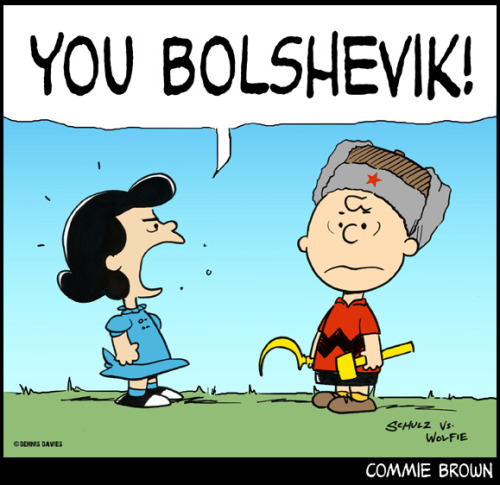 The Cold War had it right – those Communists sure are sneaky and not to be trusted, least of all with being original. While doing some completely unrelated research, I stumbled across some acts of true evil that must be revealed.
  North Korea isn’t the only Red country to be ripping off original American products and trying to pass them off to the rest of the world. On January 23, 2011, China released a video of an air force drill that was remarkably similar to a scene in Top Gun. That film is awful enough, the world doesn’t need someone else trying to bring it back. The final scene of the film was spliced into the drill footage and aired on state television, CCTV. Although the film was taken down shortly afterwards, the Wall Street Journal ran the footage from Top Gun and the Chinese air force drill side by side. Note to China: If you’re going to try to make your military look all cool and powerful, don’t use a movie made 25 years ago to try to make your point and hope no one will notice. If you are going to steal film footage and splice it into military videos, at least choose a good movie.